
Breathtaking Natural Beauty
5 September 2026
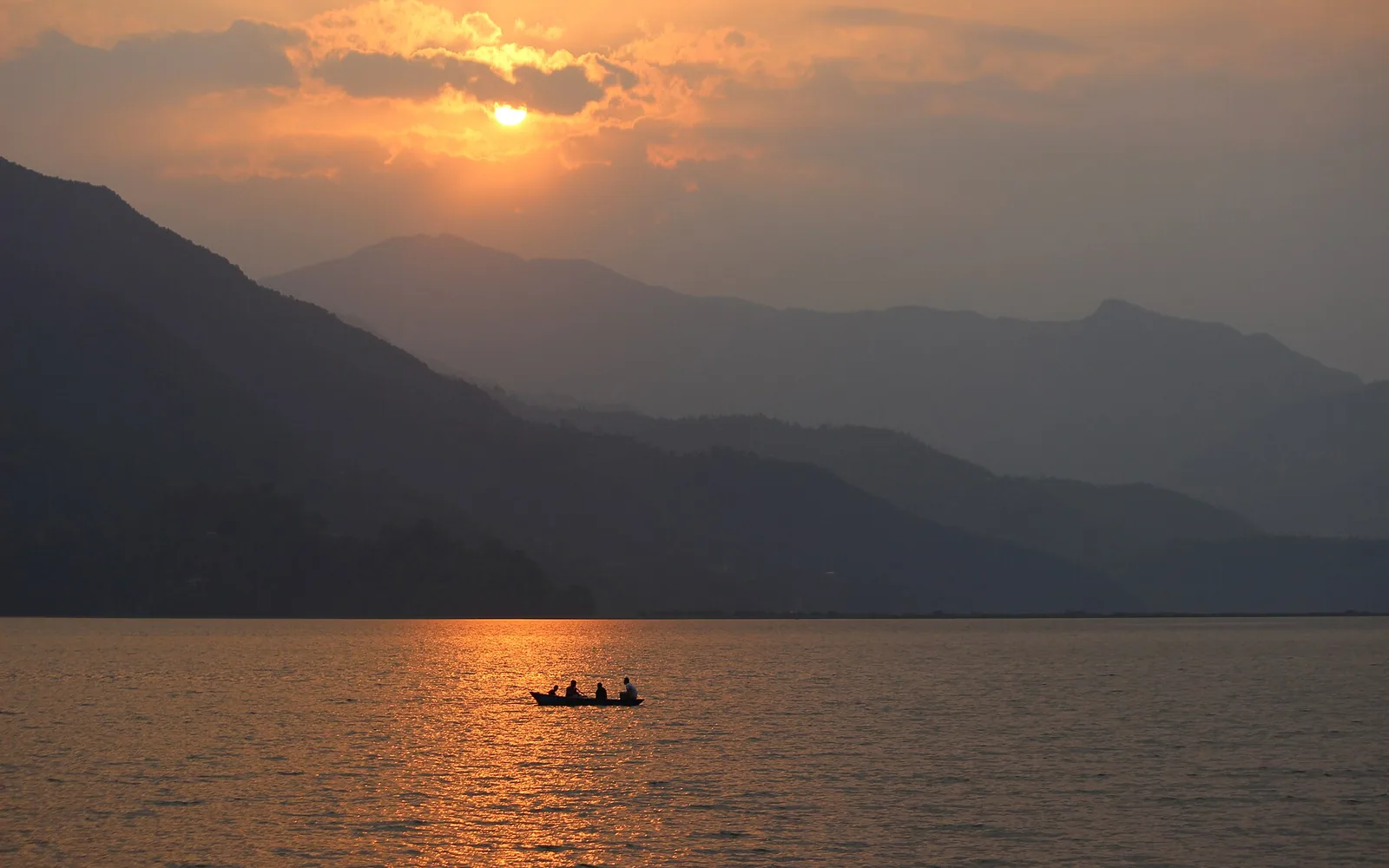
Nepal fits a climb from 60 metres above sea level to 8,849 metres into roughly 200 kilometres of width. That is why the scenery changes so fast here: subtropical jungle, terraced middle hills, alpine pasture and permanent ice, all within a day's drive of each other.
Pokhara and Phewa Lake
Phewa Lake at first light, with fishing boats out and the Annapurnas reflected on a still morning, is the postcard — and it earns it. Pokhara sits at 800 metres, which makes it warm when Kathmandu is cold, and it is the start of most Annapurna treks. Walk up to Sarangkot for sunrise, or take the short boat across to the far shore and climb to the World Peace Pagoda for the view back over the town.
The middle hills
The part of Nepal most visitors see only through a bus window is, for many people, the best of it: terraced hillsides stacked a hundred deep, villages on ridgelines, rivers a long way below. Short routes out of the valley — Nagarkot, Dhulikhel, Shivapuri, Chisapani — give you a day or two of that without committing to a full trek, and the Himalaya on the skyline on any clear morning.
Low and wild
South of the hills, the Terai is flat, hot and green: sal forest, elephant grass and slow rivers. It is a genuinely different country from the mountains, and the national parks there are the reason to make the trip.
Where the valley fits
Kathmandu is the hinge. Everything above is within a flight or a drive, and almost every itinerary starts and ends here. Base yourself somewhere comfortable, go out for four days, come back, do your laundry, go out again. It is a much better way to see the country than living out of a suitcase in a different hotel each night.
Photo: Sun Set over Phewa Lake by Sanu N, CC BY-SA 4.0, via Wikimedia Commons.
