Nepal Is Open
5 September 2026
Welcoming. Safe. Beautiful. Three words that have to be earned rather than claimed, so here is what sits behind them.
Welcoming
Nepal has made a living from visitors for sixty years, and it shows in small ways: the shopkeeper who walks you to the right street rather than pointing, the guesthouse owner who writes your bus ticket in Devanagari so the driver can read it. English is widely spoken in Kathmandu, Pokhara and on the main trekking routes. Most nationalities can get a visa on arrival at the airport — check the current rules for your passport before you fly, since the categories and the fees do change.
Safe
Ordinary common sense goes a long way. Traffic is the real hazard in the city, not crime. Drink filtered or boiled water. On a trek, altitude deserves more respect than anything else on the trail — ascend slowly above 3,000 m, and take a headache seriously rather than walking through it. Travel insurance that explicitly covers trekking altitude and helicopter evacuation is not optional.
Beautiful
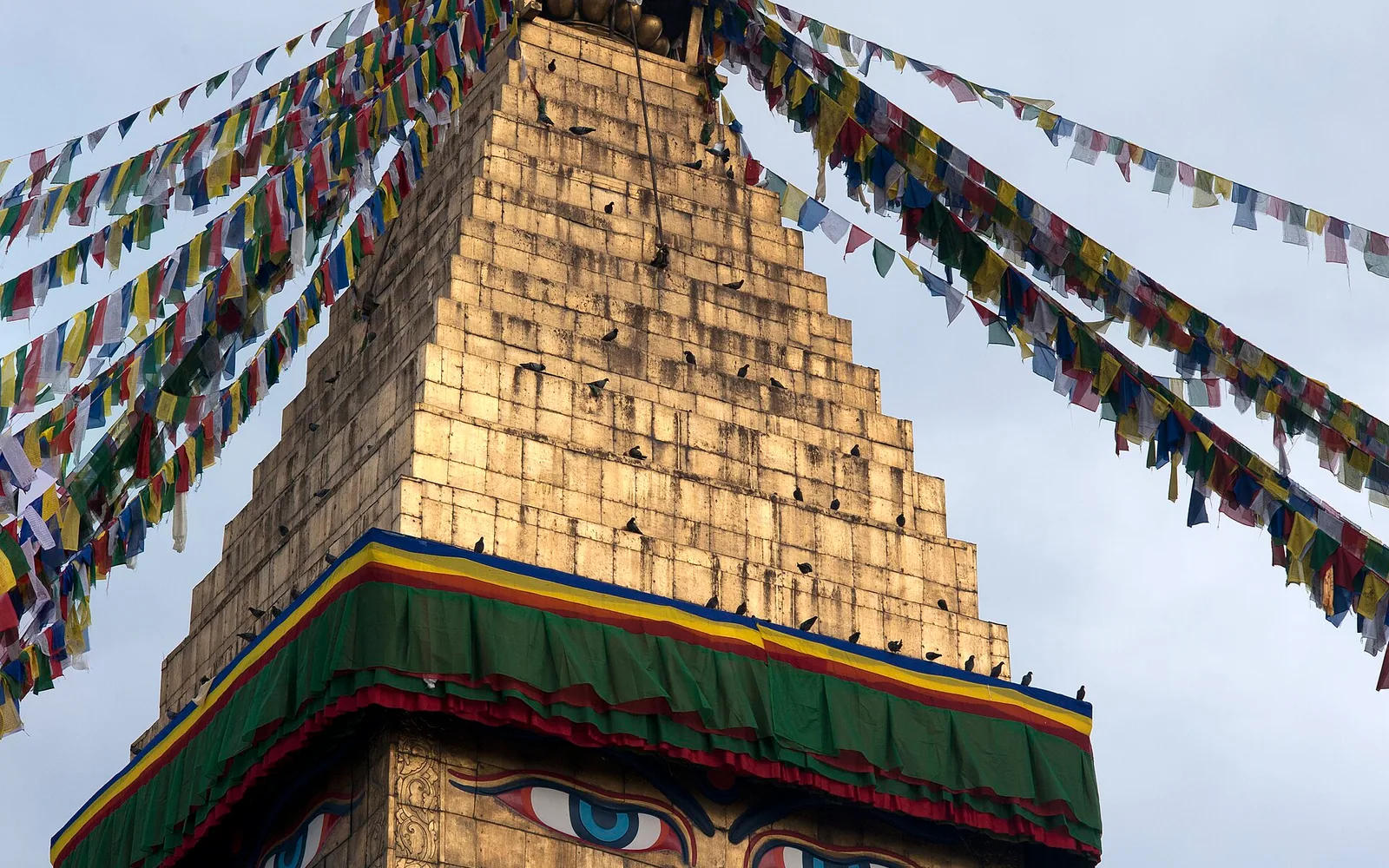
Morning light on Boudhanath, when the stupa is circled by people walking clockwise before work. A courtyard shrine two streets from the flat you booked, with marigolds left on it that morning. A rooftop where the whole valley opens up at dusk and, on a clear winter day, the Himalaya sit along the northern horizon like a rumour.
None of that is behind a rope, and none of it requires a tour.
The way to see it
Stay a week rather than two nights. Pick a neighbourhood instead of a hotel district — Jhamsikhel, Patan, Bhaisepati — and let the trip happen at walking pace. The city rewards people who stay long enough to have a regular tea shop.
Photo: 20110725 Budha eyes closeup Bodhnath Stupa Kathmandu Nepal by User:Ggia, CC BY-SA 3.0, via Wikimedia Commons.
